I’ve lost count of how many times I’ve bought something cheap, felt smart for about a day, then quietly ended up paying for it again later. Not at the checkout. Later. When the shirt shrinks. When the seams twist. When the “bargain” stops being wearable and I’m back online looking for a replacement.
That’s the part most budget fashion advice skips. It focuses on price tags. Not what happens after 3 washes, or after you actually try to build outfits around the same pieces every week. I’ve noticed the real cost shows up in fragments. Time. Replacements. Repairs. Even just frustration.
The “cheap win” that doesn’t stay cheap
A $10 shirt feels like a win in the moment. I’ve bought plenty of them.
But here’s what I actually see happen after a few wears:
- Fabric starts thinning in high-friction areas (under arms, waist, cuffs)
- Dark colours fade unevenly after repeated washing
- Stitching loosens at stress points
- Fit changes slightly, but enough to ruin how it sits
The annoying part isn’t the failure. It’s the repetition. I don’t replace one item. I replace the same category again and again—basic tees, casual shirts, everyday trousers.
And then I end up spending more time shopping than I expected in the first place.
Key friction: cheap clothes don’t fail once. They fail early, then force repeat purchases.
What I stopped buying completely (after too many repeats)
This is where things started to change for me. I didn’t overhaul my wardrobe. I just stopped rebuying certain categories that kept breaking.
- Ultra-cheap white shirts → too sheer or shrink after wash #2
- Trend sneakers → look fine, but the soles wear fast
- Thin synthetic trousers → lose structure within weeks
Each one looked fine on day one. That’s the trap.
What I noticed is that “cheap” doesn’t fail evenly. It fails fast in specific categories. Once I recognised that pattern, I stopped treating all items the same.
Cost-per-wear is the only metric that stays honest
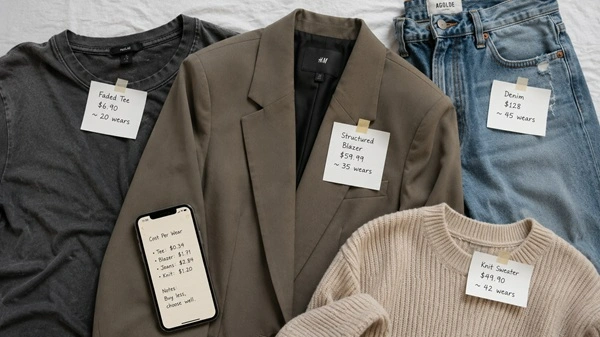
Price is misleading. I’ve learned that the real number is how often something survives real use without becoming annoying.
Instead of thinking in price tags, I started tracking how many times I could realistically wear something before it stopped being useful. Here’s a simple breakdown from my own rotation:
| Item type | Price | Usable wears | Cost per wear | What actually happens |
|---|---|---|---|---|
| Fast fashion hoodie | $25 | 8–12 | ~$2.10–$3.10 | Pilling starts early, shape collapses after repeated washes |
| Mid-range jacket | $80 | 50–70 | ~$1.10–$1.60 | Holds structure, stays in rotation longer without noticeable wear |
| Cheap jeans | $20 | 10–15 | ~$1.30–$2.00 | Fit loosens quickly, knees lose structure, stops feeling sharp |
What matters isn’t just durability. It’s whether I actually want to keep wearing it.
Some cheap items technically survive. But they stop feeling good to wear, which is almost the same as failing.
Fashion advocacy groups often focus on the environmental cost of fast fashion, but the consumer-side reality is more immediate. Cheap clothing creates a maintenance stack—repairs, replacements, and constant wardrobe turnover—that quietly consumes both time and money long before sustainability even enters the picture.
Thrifting isn’t automatically cheaper (I’ve learned this the hard way)
I still thrift. But I don’t treat it like a guaranteed saving anymore.
Here’s what usually happens in practice:
What works well:
- High-quality older jackets and coats
- Denim that already has structure
- One-off unique pieces that fit immediately
What quietly drains value:
- Buying “almost fits” items that need tailoring
- Spending hours sorting through low-quality stock
- Impulse grabbing because everything feels like a deal
I once picked up a blazer for cheap, then paid more to alter it than I would’ve spent on a decent new one. That changed how I look at thrift “wins.”
Key friction: thrift shopping feels cheap at checkout, but tailoring + time often erase the savings.
The hidden cost nobody tracks: maintenance
Clothing doesn’t behave the same everywhere. I only really understood this after wearing the wrong fabrics in the wrong conditions.
Some examples that stood out:
- Polyester-heavy outfits in humid weather → they don’t breathe, so they start feeling sticky and uncomfortable fast
- Viscose tops in heat → drape nicely at first, then cling and lose structure once sweat and movement kick in
- Acrylic knitwear in everyday use → looks fine in-store but starts pilling heavily from backpack straps or crossbody bags
- Stretch denim with high elastane content → feels great initially, then slowly loses shape after repeated sitting and washing
What looked like “cheap and versatile” on the rack turned into “only wearable in very specific conditions.”
And that mismatch is where the hidden cost shows up again. Not in money first, but in replacement cycles. If something only works 20% of the time, you end up buying something else for the other 80%.
Key friction: fabric choice (especially polyester blends, viscose, and acrylic knits) directly determines how quickly budget clothing becomes unusable in real conditions.
Fit is where most “budget outfits” actually fail
I’ve worn $15 outfits that looked better than expensive ones. I’ve also worn expensive pieces that felt off instantly.
The difference is almost always fit.
Not body type theory. Actual fit behavior:
- Shoulder seams sitting slightly off → jacket looks cheap instantly
- Waist placement even 1–2 cm off → trousers feel wrong all day
- Sleeve length slightly long → makes entire outfit look unintentional
- Fabric tension when sitting → reveals poor cut immediately
One thing I noticed over time: bad fit doesn’t just look bad. It makes you avoid the item entirely. It becomes something you “might wear” but rarely do.
That’s wasted money in disguise.
Emotional spending is the real budget leak
Sale sections and thrift racks create a specific mindset shift.
I’ve caught myself doing this pattern more than once:
- “It’s discounted, I should grab it.”
- “I can make this work later.”
- “It’s too cheap to ignore.”
What actually happens:
- I buy more than planned
- Only a small portion integrates into my wardrobe
- The rest becomes clutter or donation piles
So the spending isn’t reduced. It’s redistributed into low-use items.
Key friction: cheap fashion increases decision fatigue instead of reducing spending.
Lifestyle mismatch: when the outfit is fine, but the environment isn’t
I stopped assuming clothes fail because they’re “bad quality.” A lot of the time, they’re just placed in the wrong environment.
Some pieces look fine on paper but fall apart in practicality depending on where you actually wear them.
Here’s what I mean:
- Office settings often demand structure and polish, even for casual dress codes. Some lightweight pieces just don’t read “put-together,” even if they’re comfortable
- Humid climates change how outfits function socially. A fabric that looks fine indoors can feel visually “off” once it clings or loses shape from heat exposure
- Travel or long days outside expose limitations in outfit versatility. Something that works in short bursts doesn’t always hold up across a full day
What matters here isn’t whether the fabric breaks down or stretches. It’s whether the outfit still fits the situation.
I’ve had clothes that were technically fine in quality but still stayed unworn because they didn’t match the context I actually live in.
Key friction: lifestyle mismatch is about situational failure—when clothes don’t fit the environment or social setting, even if they’re physically intact.
My actual buying rules now (not theory)
I don’t try to “shop smarter” anymore in a vague way. I just filter faster. If something fails one of these checks, I leave it. No debate, no second-guessing.
These are the rules I actually use:
If I can’t style it at least 3 different ways immediately, I leave it.
Most impulse buys fail here. If it only works with one outfit in my head, it becomes dead weight fast.
“I’ll figure it out later” never actually happens.
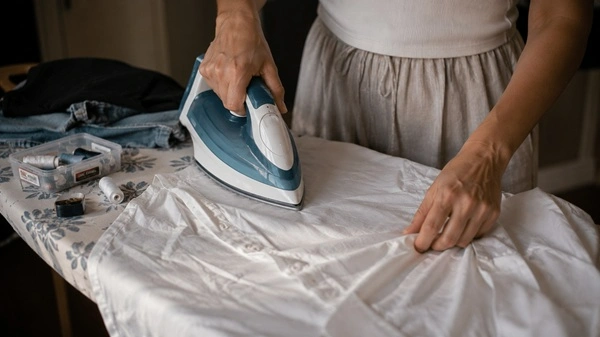
If it needs constant ironing, delicate handling, or special care just to stay wearable, it doesn’t stay.
I used to ignore this and ended up with clothes that looked fine but quietly became chores every time I wore them.
If stitching looks loose, uneven, or weak in-store, I assume a short lifespan and walk away.
This is less about style and more about failure prediction. If it already looks fragile under store lighting, it usually won’t survive real use.
Budget Fashion Cost Breakdown: What I Learned From Real Wear
I used to think budget fashion was just about finding cheaper clothes. It isn’t. It’s about where the cost shows up after you’ve already bought them.
Once I started breaking things down by wear life, maintenance effort, fabric behavior, and whether an item actually fits my day-to-day life, the pattern got hard to ignore. Some pieces look cheap but behave expensively over time. Others look like a bargain upfront, but quietly drain money through replacements, repairs, and items I just stop wearing.
The biggest shift wasn’t buying less for the sake of it. It was learning to predict failure before it happens. If something doesn’t survive real use, doesn’t integrate into multiple outfits, or turns into extra work every time I wear it, it doesn’t stay in rotation for long.
That’s really what “budget fashion” ended up meaning for me. Not chasing low prices, but reducing the number of mistakes that keep coming back into the wardrobe.