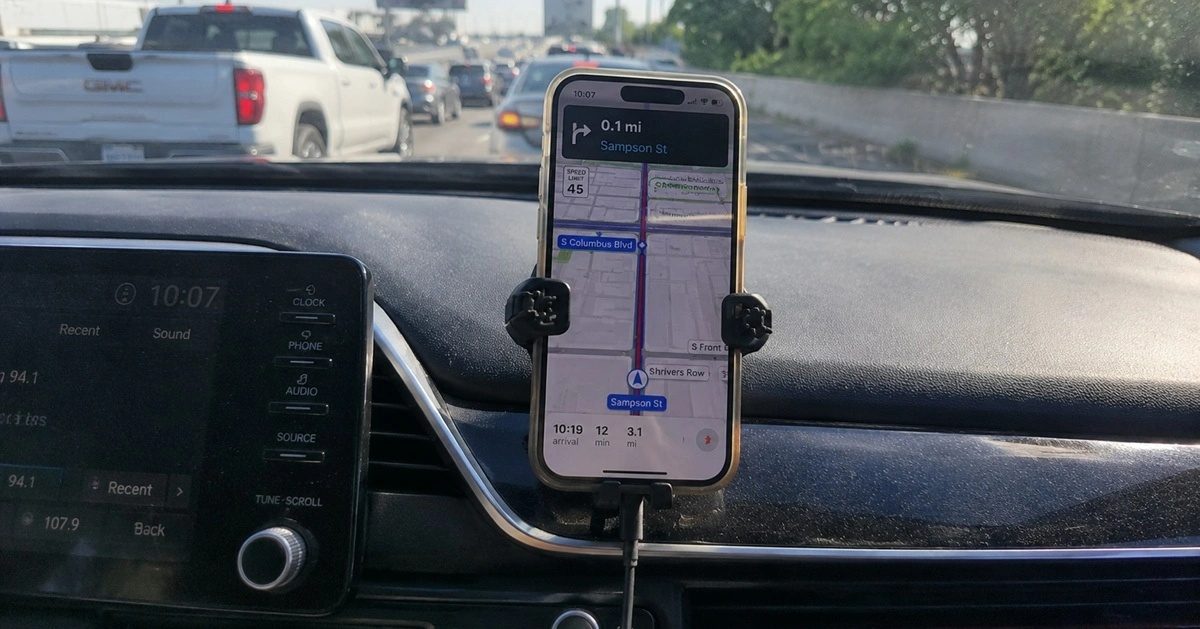
Wireless car chargers sound great until you actually use them every day. On paper, it’s simple. Drop your phone on a mount, and it charges. No cables. No mess. In reality, it’s a mix of convenience, heat, alignment issues, and a few annoying surprises you only notice when you’re stuck in traffic and your battery still somehow drops.
I tested a handful of these across normal daily driving. Not lab conditions. Think stop-and-go traffic, short trips, long idle waits with Maps running, and the usual mix of music streaming and calls. Some performed fine. Others felt good for the first week, then slowly became unreliable in ways that don’t show up in spec sheets.
Wireless car chargers let you power your phone without cables by using Qi wireless technology. You place your phone on a mounted pad, and charging starts automatically. They’re convenient for short daily drives, but real-world performance can vary due to heat, alignment issues, and slower charging compared to wired connections.

Qi Charging Sounds Simple, Until Alignment Gets Involved
Wireless car chargers rely on Qi technology, which uses electromagnetic induction between coils in the charger and your phone. In theory, once the coils line up, charging starts automatically.
In practice, alignment is everything.
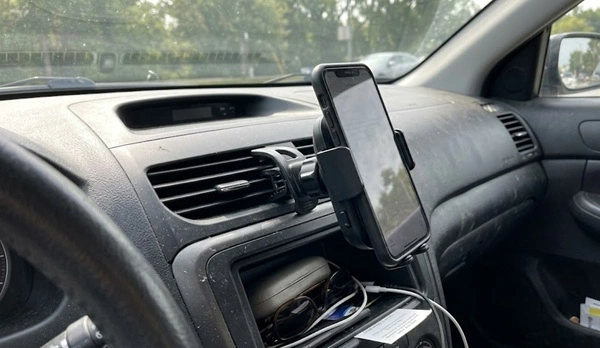
When I used vent-mounted chargers in a compact sedan, even small bumps shifted the phone just enough to interrupt charging. It didn’t always disconnect completely. Sometimes it just quietly slowed down, which is worse because you don’t notice until later.
Dashboard mounts were more stable, but only when positioned correctly. Too low and the phone gets blocked by the steering wheel. Too high and you deal with glare during afternoon driving.
What Actually Works (and What Sounds Better Than It Is)
Fast charging (7.5W to 15W)
Manufacturers love advertising 15W speeds. I’ve rarely seen that sustained in real driving.
What actually happens:
- 15W drops to lower speeds once the phone heats up
- Navigation + music almost always triggers throttling
- Short trips don’t benefit much from “fast charging” claims
If you’re relying on wireless charging to recover battery quickly during a commute, expectations need adjusting.
Vent mounts
These are the most frustrating in real use.
They look clean and compact. Then you hit uneven roads or leave the car parked in heat.
What I noticed:
- Clips loosen over time
- Air vents don’t always support heavier phones
- Heat from AC or sunlight affects charging stability
They work, but not consistently enough for long-term daily use.
Dashboard and windshield mounts
These are more stable overall.
But they come with trade-offs:
- Can block visibility if placed poorly
- Adhesive mounts struggle in extreme heat
- Windshield mounts sometimes vibrate slightly on rough roads
Still, these performed better than vent mounts in my testing.
Cup holder mounts
These feel like the “safe” option on paper.
In reality:
- Great stability
- Awkward viewing angle
- Harder to glance at navigation quickly
I wouldn’t use these for city driving, but they’re fine for long highway trips.

The Heat Problem Nobody Talks About Enough
Heat is the real weakness of wireless car charging.
During testing, phones regularly warmed up enough to slow charging. Not dangerously hot, but enough for the system to throttle power.
It usually happens when:
- You’re running GPS navigation
- The phone is in direct sunlight
- The mount doesn’t allow airflow
In one case, charging basically paused during a midday drive until the AC cooled things down.
This is where wired charging still wins easily. No throttling. No guesswork.
Wireless vs Wired Charging in Real Use
Here’s the practical difference I noticed:
| Feature | Wireless Car Charger | Wired Charger |
|---|---|---|
| Ease of use | Very high | Moderate |
| Charging speed | Inconsistent | Stable |
| Heat management | Weak point | Strong |
| Reliability during long drives | Medium | High |
Wireless charging is convenient. Wired charging is dependable. That’s still the trade-off.
The Features That Actually Matter (After You Stop Trusting the Specs)
Specs look good on paper. In real driving, most of them stop meaning much once the phone starts slipping or the charger heats up halfway through a trip.
What actually decides whether a wireless car charger is useful or just background clutter comes down to a few very specific things.
Strong grip system (this is where most chargers fail quietly)
If the phone shifts even a few millimeters, everything falls apart.
I’ve had mounts that looked solid in the box but slowly loosened after a week of daily use. One vent clip in particular started fine, then couldn’t hold the phone steady during slow traffic bumps. Charging didn’t fully stop, but it kept interrupting just enough to drain confidence in it.
Auto-clamping arms help here. So do strong magnets. But weak grip designs fail in a subtle way—you don’t notice immediately, you just end up with less battery than you expected.
Cooling design (more important than wattage claims)
Most listings push numbers like 15W fast charging. What they don’t highlight is how quickly heat ruins that promise.
In practice, I noticed charging slowdowns during:
- midday drives with sunlight hitting the dashboard
- long navigation sessions with Maps running
- idle traffic with the phone sitting still in a closed car
Once the phone heats up, power drops. Sometimes noticeably. That’s where better-designed mounts with airflow spacing or heat dissipation surfaces actually perform better than “higher wattage” models.
Adjustable angles (you only notice this when it’s bad)
This sounds minor until you’re trying to check directions quickly.
If the mount doesn’t adjust properly, you end up in one of two annoying situations:
- the phone blocks part of your windshield view
- or it sits too low and forces you to look away from the road longer than you should
I’ve stopped using mounts that don’t offer proper 360° rotation. Not because it sounds good in specs, but because small angle issues become daily friction.
Real compatibility (the hidden limitation)
“Works with all Qi devices” is technically true, but practically incomplete.
What actually changes performance:
- thicker phone cases reducing coil contact
- older phones charging slower than expected
- slight misalignment on vertical mounts
- battery health (older phones heat up faster and throttle sooner)
This is the part most product descriptions skip. Compatibility isn’t just “yes or no.” It’s “how well does it behave under imperfect conditions,” which is most of the time in real driving.
So Are Wireless Car Chargers Actually Worth It?
Yes, but only if you understand what they’re good at.
They work best for:
- Short daily commutes
- Stop-and-go city driving
- People who hate cable clutter
They struggle with:
- Long drives with heavy GPS use
- Hot climates or sun-facing dashboards
- Phones with already weak battery health
I wouldn’t rely on them as my only charging method in the car. I treat them as a convenience tool, not a power solution.
Final Take
Wireless car chargers sit in a weird space. They solve one annoyance (cables) while introducing a few others (heat, alignment, inconsistent charging).
When they work, they feel clean and effortless. When they don’t, they quietly fail in the background without obvious warning.
If you’re buying one, focus less on wattage claims and more on stability, cooling, and mounting design. Those three factors decide whether it becomes useful or just another gadget that slowly gets ignored on your dashboard.