Everyone packs like travel is a styling problem you can solve at home. Pick a few neutral pieces, mix them properly, and somehow everything is supposed to work for a week straight.
It doesn’t.
I’ve had outfits that looked perfectly fine at 7 AM turn into something I didn’t want to wear again by 3 PM. Not because the clothes were wrong. Because the day they went through wasn’t designed for them.
Heat. Sitting for hours. Air-conditioning that feels like a freezer. Walking outside again into humidity that sticks to everything.
That’s what actually breaks travel outfits.
Not styling. Conditions.

The 6-hour rule that no one talks about
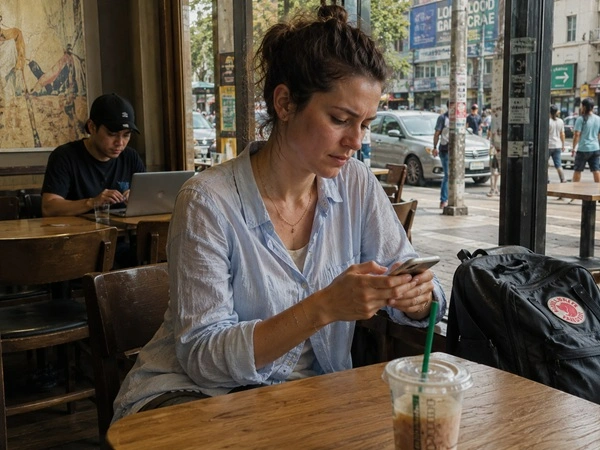
I started noticing a pattern after a few trips. Most outfits don’t fail immediately. They fail on a delay.
Roughly 5 to 6 hours in, something shifts.
Here’s what that breakdown actually looks like in real life:
| Time | What’s happening | What it feels like |
|---|---|---|
| 0–2 hours | Outfit is fresh | Everything still “works.” |
| 3–5 hours | First stress signs | Fabric shifts, sweat builds |
| 5–8 hours | Breakdown phase | Wrinkles, odor, discomfort |
| 8+ hours | Full fatigue | You want to change clothes immediately |
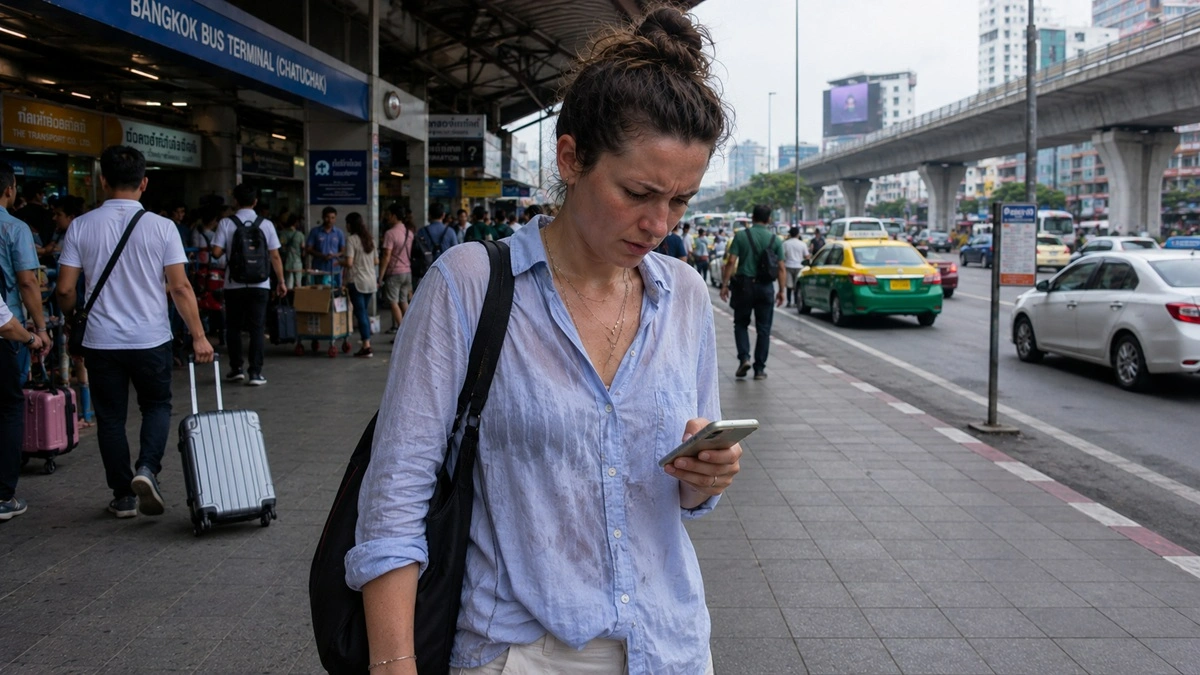
I’ve had days in Bangkok where I left a hotel looking completely put together, then by mid-afternoon my shirt felt like it belonged to a different trip entirely.
Nothing dramatic happened. It just degraded slowly under pressure.
That’s the part most travel advice skips.
Humidity doesn’t ruin outfits instantly. It erodes them.
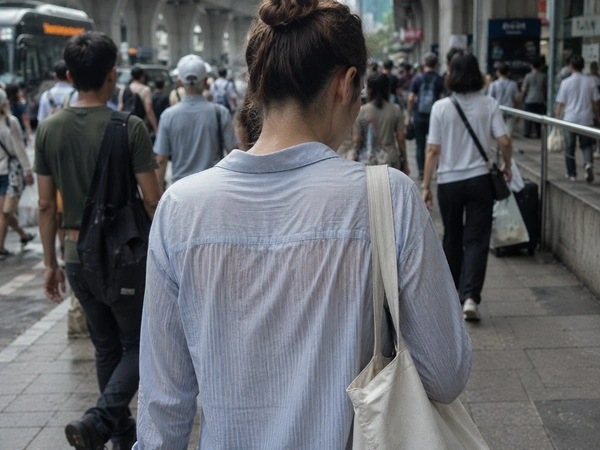
Humidity is not a styling issue. It’s a performance test.
I’ve worn linen shirts that looked perfect in theory. In real heat and humidity, they changed behavior fast:
- after 20–30 minutes outside, fabric starts clinging slightly
- wrinkles appear while you’re still actively wearing it
- sweat doesn’t fully disappear until you change or wash
- the “fresh” look is gone before the day properly starts
One thing I learned quickly: breathable fabrics still fail if they can’t recover.
And recovery matters more than comfort at the start of the day.

Airport outfits are a controlled illusion
Airports look predictable on paper. Sit, wait, board a plane.
That’s not what actually happens.
A typical airport day I’ve had:
- long walks between terminals
- repeated sitting for hours in one position
- temperature swings between freezing gates and warm walkways
- constant bag handling, security checks, and movement
By the time I actually board, the outfit has already been stressed.
Two things consistently break:
1. Temperature mismatch
What feels comfortable at home doesn’t survive:
- freezing air-conditioning at gates
- warm boarding areas
- heated jet bridges
You end up layering on or off constantly.
2. Fabric collapse from sitting
After hours of sitting:
- waistbands shift slightly
- shirts crease in pressure points
- structured pieces lose shape
I’ve arrived looking fine, but feeling like I’ve been wearing the same clothes for two days straight.
The failure catalog (what actually breaks outfits)
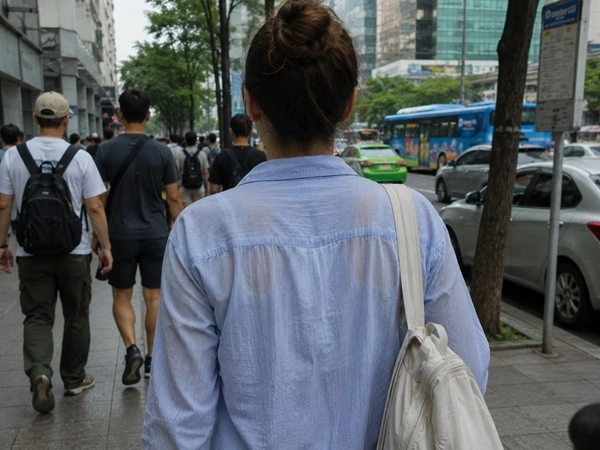
Most travel guides list clothing items. That’s not the real system.
What actually matters is how clothes fail under specific conditions:
| Condition | What breaks | Real outcome |
|---|---|---|
| Humidity | fabric cling, odor buildup | reduced re-wearability |
| Long sitting | waist compression, deep wrinkles | outfit loses structure |
| Backpacks | friction zones on shoulders/back | uneven fabric wear |
| AC exposure | temperature shock | constant layering discomfort |
| Re-wearing | odor fatigue, visual repetition | psychological discomfort |
This is the gap most “capsule wardrobe
advice ignores completely.
Travel outfits don’t fail as outfits. They fail as systems under stress.
Outfit repetition fatigue is real (and it changes how you pack)
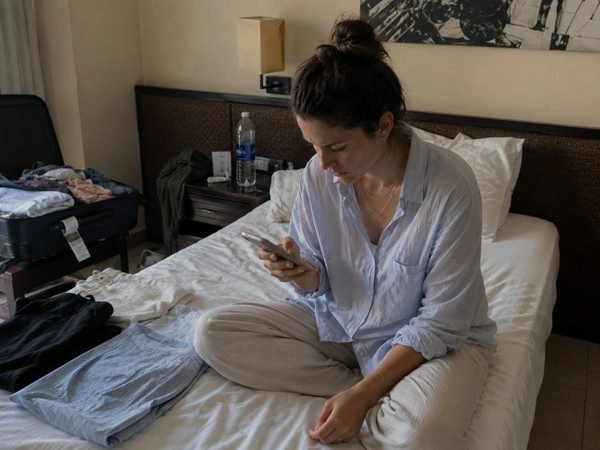
This one surprised me more than the physical discomfort.
Even when clothes are clean and still wearable, repetition starts to feel wrong on longer trips.
I’ve had moments where I thought:
- I already wore this in photos yesterday
- this outfit is showing up too often in my feed
- I need something new just so it feels different
Nothing changed physically about the clothes. But mentally, they felt “used up.”
That’s where overpacking starts.
Not from practicality. From perception.
And the downside is immediate:
- heavier luggage
- more morning decision fatigue
- more clothes that never get worn
Why “versatile pieces” don’t survive real travel
Versatility is one of those ideas that sounds efficient but breaks under real conditions.
I’ve tried it: neutral palette, interchangeable pieces, mix-and-match system.
It works until conditions stop cooperating.
What actually breaks “versatile” outfits:
- sweat patterns don’t match color theory
- humidity changes fabric behavior, not just appearance
- sitting for hours ruins structure regardless of styling
- re-wear comfort drops faster than expected
A jacket that “goes with everything” still becomes useless if it feels too hot, too wrinkled, or too worn after one full day.
What I started paying attention to instead
After enough trips, I stopped thinking in outfits and started thinking in behavior.
Three things matter more than anything else:
1. Recovery speed
How fast does the clothing reset after a full day of wear?
Some fabrics bounce back overnight. Others stay visibly tired.
2. Heat response under stress
Not just breathability, but what happens after sweating in it for hours.
Some clothes start fine and degrade quietly. Others stay stable.
3. Re-wear tolerance
Can I wear it again tomorrow without feeling physically or mentally done with it?
If not, it doesn’t belong in a travel rotation.
A real travel day (how breakdown actually happens)
A typical day I’ve experienced:
Morning: everything looks clean, simple, intentional
Midday: walking + heat starts changing how fabric sits
Afternoon: AC-heavy stop makes layering uncomfortable
Evening: everything still “looks fine” but feels off
By night:
- shirt feels slightly damp in areas you didn’t notice earlier
- pants don’t sit the same way anymore
- shoes feel tighter after constant movement
- I’m mentally ready to stop wearing the outfit
Nothing exploded. Nothing failed suddenly.
It just degraded slowly until it stopped being comfortable.
What actually changes when you understand this
Once you stop treating travel as a styling problem, packing becomes simpler.
You stop asking:
- what looks good together
And start asking:
- what survives a full day under changing conditions
That shift removes most of the guesswork.
It also changes what you pack:
- fewer “statement” pieces
- more repeat-tolerant basics
- less emphasis on matching, more on endurance
Conclusion
Most travel outfit advice focuses on how things look at the start of the day. But travel doesn’t happen at the start of the day. It happens across hours of movement, heat, sitting, and constant environmental shifts.
That’s where outfits break down. Slowly. Predictably. In ways you don’t notice until you’re already uncomfortable.
Once you start looking at clothing through conditions instead of styling, the entire idea of a “perfect travel outfit” stops making sense.
What matters is not how it starts. It’s how long it holds up.
Practical takeaway
Before packing anything, I now run a simple check: what happens to this after 6–8 hours of heat, sitting, walking, and being worn the next day again?
If the answer feels uncertain, I leave it out. Even if it looks perfect in theory.